
Top 10 Most Influential Programmers of All Time Who Changed the World
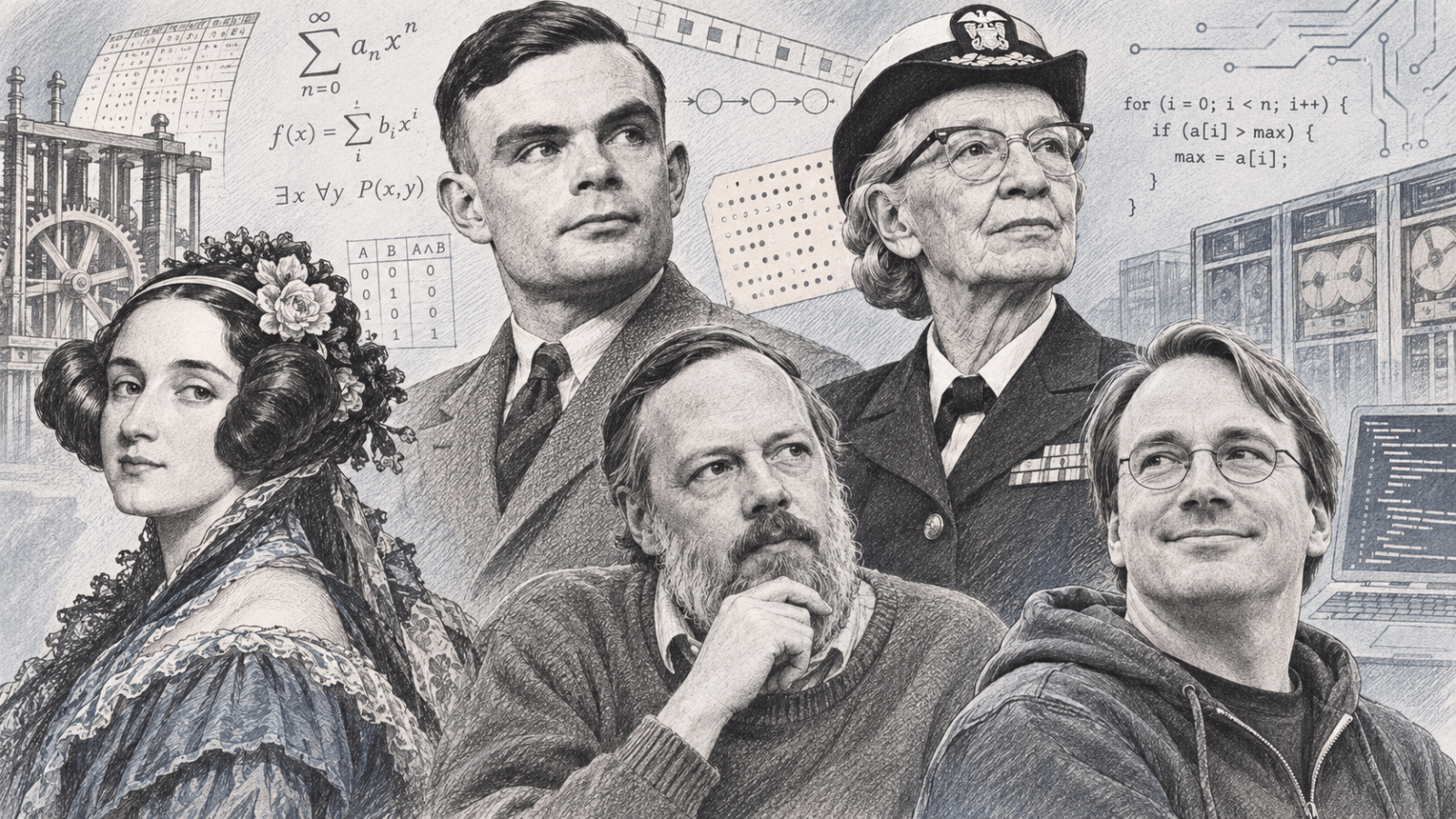
Every app you open, every website you visit, and nearly every digital device you use exists because of the work of programmers. Yet, behind today’s sophisticated technology are a handful of extraordinary minds whose innovations fundamentally changed how computers work.
Some developed programming languages that became industry standards. Others created operating systems, pioneered software engineering, or laid the theoretical foundations of modern computing.
From Ada Lovelace’s groundbreaking work in the 19th century to Linus Torvalds’ open-source revolution, these pioneers helped transform computing from an experimental science into an indispensable part of everyday life.
Here are 10 of the most influential programmers of all time, presented roughly in chronological order of their defining contributions.
Table of contents
1. Ada Lovelace – The Pioneer of Computer Programming

Born: 1815, London, England
Known for: Early computer algorithms and the Analytical Engine
Long before electronic computers existed, Ada Lovelace imagined machines capable of doing far more than mathematical calculations.
In 1843, while working with Charles Babbage’s proposed Analytical Engine, Lovelace published detailed notes that included a method for calculating Bernoulli numbers. This is widely recognized as one of the earliest published examples of a computer program.
What made Lovelace extraordinary was her understanding that programmable machines could eventually manipulate symbols, compose music, and perform tasks beyond arithmetic.
Although historians debate whether she should be called the world’s first programmer, her vision anticipated the general-purpose capabilities of modern computers.
Why she matters: Lovelace helped establish the idea that computers could be programmable, general-purpose machines rather than mere calculating devices.
Her legacy lives on in Ada, a programming language named in her honor.
2. Alan Turing – The Father of Theoretical Computer Science
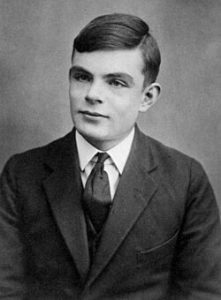
Born: 1912, London, England
Known for: Turing machines, computability theory, and early artificial intelligence
Few individuals have influenced computer science as profoundly as Alan Turing.
In 1936, Turing introduced the theoretical concept of a universal computing machine, now known as the Turing machine. His work helped define what it means for a problem to be computable using an algorithm.
During World War II, he played a crucial role in British efforts to break German encrypted communications at Bletchley Park.
After the war, Turing contributed to early electronic computer development and explored the possibility of machines displaying intelligent behavior.
His famous 1950 paper, Computing Machinery and Intelligence, introduced what later became known as the Turing Test.
Why he matters: Turing helped establish the mathematical foundations of computer programming and artificial intelligence, influencing generations of computer scientists.
3. Grace Hopper – The Woman Who Helped Make Programming Accessible
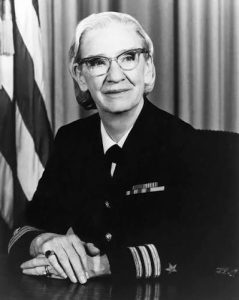
Born: 1906, New York City, USA
Known for: Early compilers, FLOW-MATIC, and contributions to COBOL
In the early days of computing, programming required detailed knowledge of machine instructions. Grace Hopper helped change that.
Working on early computer systems, Hopper developed the A-0 system in the early 1950s, often regarded as one of the first compilers.
She later led the development of FLOW-MATIC, a programming language that used English-like commands to make business data processing easier.
Her work significantly influenced COBOL, a programming language developed through a collaborative effort that became widely used in banking, government, and business computing.
Hopper believed computers should adapt to human needs rather than requiring people to communicate exclusively through complex machine instructions.
Why she matters: Hopper helped advance the idea that programs could be written in higher-level languages and translated into machine-executable instructions, making software development more practical and accessible.
4. John Backus – The Creator of FORTRAN
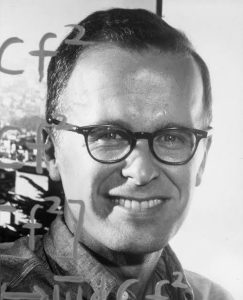
Born: 1924, Philadelphia, USA
Known for: FORTRAN and contributions to programming-language design
Imagine writing complex scientific software entirely in machine code. That was a major challenge facing programmers during the 1950s.
John Backus helped solve it.
Leading a team at IBM, Backus oversaw the development of FORTRAN, one of the first widely successful high-level programming languages. Released commercially in 1957, FORTRAN allowed scientists and engineers to express calculations using notation closer to mathematical formulas.
It also demonstrated that compilers could produce efficient machine code, helping overcome skepticism about high-level programming languages.
Backus subsequently contributed to formal methods for describing programming-language syntax, including the notation associated with Backus–Naur Form.
Why he matters: FORTRAN transformed scientific computing and helped establish compiled high-level languages as a practical foundation for modern software development.
5. Margaret Hamilton – The Programmer Who Helped Put Humans on the Moon

Born: 1936, Indiana, USA
Known for: Apollo flight software and software engineering
When NASA prepared to send astronauts to the Moon, reliable software was essential to the mission’s success.
Margaret Hamilton led the Software Engineering Division at MIT’s Instrumentation Laboratory, where teams developed onboard flight software for NASA’s Apollo missions.
The software had to operate under severe memory and processing limitations while handling unexpected conditions during flight.
During the Apollo 11 lunar landing in 1969, the guidance computer generated alarms as it faced an unusually heavy workload. Its priority-based software behavior allowed critical tasks to continue, contributing to the successful landing.
Hamilton also championed rigorous software testing, error detection, and the treatment of software development as a serious engineering discipline.
Why she matters: Her work demonstrated that software reliability could be a matter of life and death, helping shape the principles behind modern safety-critical systems.
6. Donald Knuth – The Programmer Who Made Algorithms an Art
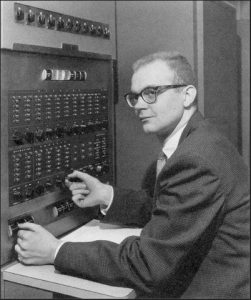
Born: 1938, Milwaukee, USA
Known for: The Art of Computer Programming, algorithm analysis, and TeX
While many programmers are remembered for creating languages or operating systems, Donald Knuth transformed how programmers study and analyze algorithms.
His influential multivolume book series, The Art of Computer Programming, began publication in 1968 and became a foundational reference for computer scientists.
Knuth helped establish rigorous mathematical techniques for evaluating algorithm efficiency and understanding computational complexity.
He also created TeX, a digital typesetting system widely used in mathematics, science, and academic publishing.
Knuth’s contributions extend to literate programming, an approach that encourages developers to explain software logic clearly alongside the code itself.
Why he matters: Knuth elevated programming from writing instructions for machines into a discipline grounded in mathematical analysis, precision, and carefully designed algorithms.
7. Ken Thompson – The Architect of Unix

Born: 1943, New Orleans, USA
Known for: Unix, the B programming language, and Go
Ken Thompson helped create one of the most influential operating systems in computing history.
In 1969, while working at Bell Labs, Thompson began developing Unix, an operating system designed around simplicity, portability, and reusable software tools.
Together with Dennis Ritchie and other collaborators, he helped turn Unix into a powerful platform for software development.
Thompson also created the B programming language, an important predecessor to C.
Decades later, he became one of the original designers of Go, a programming language developed at Google.
Unix’s philosophy of building small programs that work together continues to influence software engineering.
Why he matters: Thompson’s contributions shaped Unix-like operating systems and development practices that continue to influence Linux, macOS, servers, and modern software infrastructure.
8. Dennis Ritchie – The Man Behind the C Programming Language

Born: 1941, Bronxville, New York, USA
Known for: C programming language and Unix
Dennis Ritchie is arguably one of the most influential programmers in modern computing history.
During the early 1970s, while working at Bell Labs, Ritchie developed the C programming language. C offered programmers an unusually powerful combination of efficiency, portability, and low-level control.
Alongside Ken Thompson, he also helped develop Unix, which was subsequently rewritten largely in C.
This combination changed the software industry.
C became an important language for operating systems, embedded devices, and performance-critical applications. Its design also influenced several later languages, including C++, Java, and C#.
Even today, much of the software infrastructure powering modern computing can trace its technological ancestry to Ritchie’s work.
Why he matters: By creating C and co-developing Unix, Ritchie helped establish the foundations for modern systems programming and generations of software platforms.
9. Tim Berners-Lee – The Programmer Who Invented the World Wide Web

Born: 1955, London, England
Known for: World Wide Web, HTML, HTTP, and URLs
It is difficult to imagine modern life without websites, online shopping, search engines, or web applications.
Much of this became possible because of Tim Berners-Lee.
In 1989, while working at CERN, Berners-Lee proposed a system that would allow researchers to share and access linked information across different computers.
His work led to the creation of the World Wide Web, including foundational technologies such as HTML, HTTP, and URLs.
He also developed the first web browser and web server, helping demonstrate how the system could work.
Importantly, Berners-Lee invented the Web, not the Internet itself, which had developed through earlier networking research.
He later founded the World Wide Web Consortium (W3C) to advance interoperable web standards.
Why he matters: Berners-Lee transformed the Internet into a globally accessible information platform, laying the groundwork for websites, online services, and the modern digital economy.
10. Linus Torvalds – The Creator of Linux and Git

Born: 1969, Helsinki, Finland
Known for: Linux kernel and Git
In 1991, a Finnish computer science student named Linus Torvalds announced a personal operating-system kernel project.
That project became Linux.
What began as an experiment evolved into one of the most important open-source software projects in history.
Today, Linux underpins vast portions of the world’s computing infrastructure, including cloud servers, supercomputers, embedded devices, and Android-based systems.
But Torvalds’ influence extends beyond Linux.
In 2005, he created Git, a distributed version control system that fundamentally changed how developers manage source code and collaborate on software projects.
Git subsequently became a standard tool in modern software development and powers workflows used on platforms such as GitHub and GitLab.
Why he matters: Torvalds helped reshape both computing infrastructure and global software collaboration, proving the enormous potential of open-source development.
Other Legendary Programmers Worth Mentioning
Choosing only ten programmers from centuries of computing history inevitably leaves out remarkable contributors.
Guido van Rossum created Python, one of the most widely used programming languages in data science, automation, and artificial intelligence. Bjarne Stroustrup developed C++, while James Gosling led the creation of Java.
Brendan Eich created JavaScript, a foundational language of interactive web development. The six original ENIAC programmers also made essential contributions to early electronic computing, developing programming techniques when few established methods existed.
Their work deserves recognition alongside the pioneers featured above.
Frequently Asked Questions
Who is considered the first computer programmer?
Ada Lovelace is traditionally credited as the first computer programmer because of the algorithm published in her 1843 notes on Charles Babbage’s Analytical Engine. However, historians debate this designation, particularly because Babbage developed earlier unpublished algorithms and the Analytical Engine was never completed.
Who is the most influential programmer of all time?
There is no universally accepted answer. Dennis Ritchie is a strong contender
