
Core Digital Strategies for Generating HVAC Sales Leads

Empty dispatch boards during the shoulder seasons are a major challenge for any heating and cooling business. When the weather stays mild, the phone stops ringing, and your cash flow can quickly dry up. Many business owners struggle to maintain a steady stream of work because they rely on word-of-mouth alone. To grow, you need a predictable system for generating HVAC sales leads that works regardless of the current temperature in your local market. Whether you are operating in a bustling city or a quiet suburb, having a consistent pipeline is the difference between surviving and truly thriving.
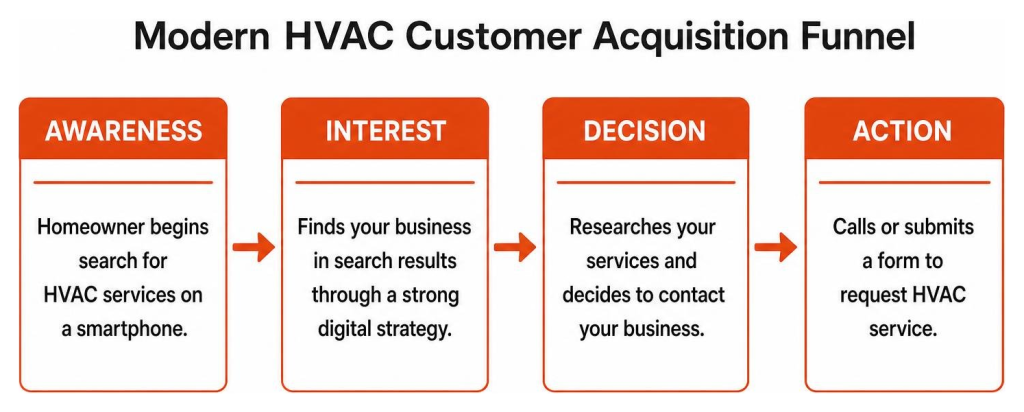
The modern homeowner begins their search for HVAC services on a smartphone. If your business is not visible in those first few search results, you are effectively invisible to the majority of your potential market. A robust digital strategy combines organic search visibility, which builds long-term authority, with paid advertising, which provides immediate, high-intent traffic. By generating HVAC sales leads through a multi-channel approach, you ensure that your brand is present whether a customer is researching a new system or facing an emergency repair.
Table of contents
Optimizing Search Visibility and Google Business Profiles
Your Google Business Profile is often the first point of contact between you and a potential customer. To dominate the local map pack, you must ensure your Name, Address, and Phone number (NAP) are consistent across every directory on the web. Create dedicated service area pages on your website that feature specific keywords for the towns and neighborhoods you serve. Mobile optimization is non-negotiable; if your site is slow or difficult to navigate on a phone, users will hit the “back” button and call your competitor instead.
High-Intent Paid Advertising and Local Services Ads
When a furnace fails in the middle of a winter storm, customers do not have time to browse blogs. They need a solution immediately. Google Local Services Ads (LSA) are essential for capturing this high-intent traffic. By earning the “Google Guaranteed” badge, you instill immediate trust in homeowners. Complement these ads with targeted pay-per-click (PPC) campaigns, using negative keywords to ensure you aren’t paying for searches like “DIY HVAC repair” or “HVAC jobs,” which do not lead to revenue.
Organic Content and Video Marketing Tactics
Content marketing is about establishing your company as the local expert. Educational blog posts—such as “How to Troubleshoot Your Thermostat” or “Signs Your AC Needs a Tune-Up”—can attract homeowners long before they are ready to buy. Video marketing adds a human element; a 60-second clip of a technician explaining how to change a filter or showing a clean, professional installation builds more trust than a thousand words of text. These assets, when distributed across social media and your website, create a library of resources that keeps your brand top-of-mind.
Exclusive Leads vs. Shared Leads: Evaluating Cost, Quality, and ROI
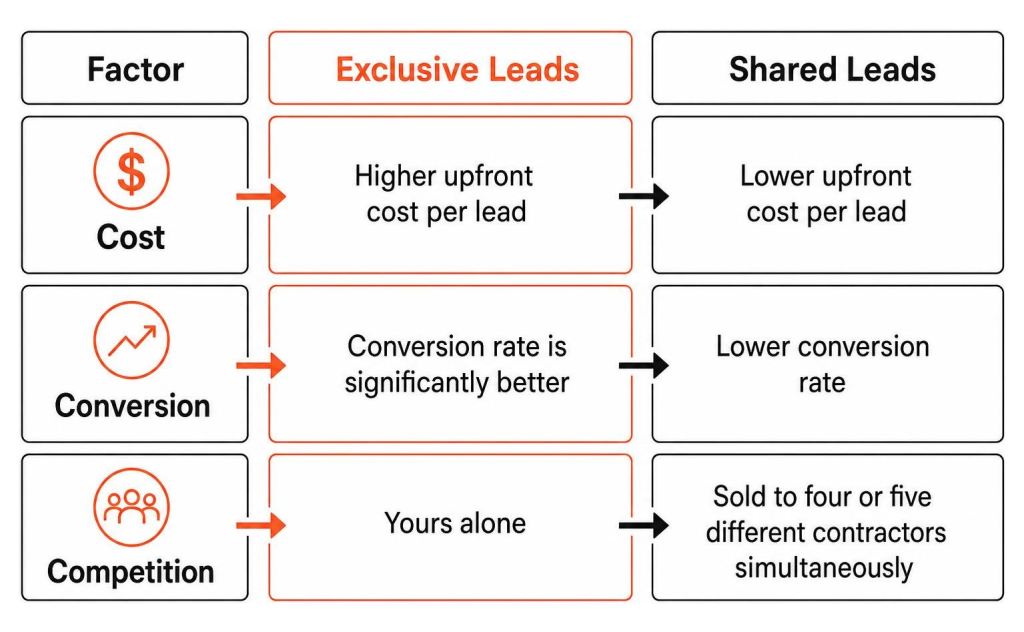
Not all leads are created equal. Shared leads are often sold to four or five different contractors simultaneously, forcing you into a race to the bottom on price. Exclusive leads, by contrast, are yours alone. While the upfront cost per lead may be higher, the conversion rate is significantly better because you aren’t competing with three other companies the moment you pick up the phone.
Pricing Models and Lead Acquisition Costs
Lead generation costs vary wildly based on your market size and the competitiveness of your region. Some providers operate on a monthly retainer model, covering SEO and ongoing ad management, while others prefer a pay-per-lead or pay-per-sale structure. Regardless of the model, you should always measure your marketing spend as a percentage of your total revenue. If your marketing budget consistently hovers between 3% and 10% of your revenue, you are likely in a healthy position to scale.
Attribution, Call Tracking, and Measuring Marketing ROI
You cannot manage what you do not measure. By using dynamic call tracking numbers, you can see exactly which ad campaign or search term drove a specific phone call. Integrating these tools with your CRM allows you to track a lead from the initial click all the way to the final invoice. This data-driven approach removes the guesswork, allowing you to cut low-performing channels and double down on the ones that actually put money in the bank.
Mastering Seasonality and Market Segmentation
HVAC demand is inherently cyclical. The key to year-round profitability is not just reacting to the weather, but proactively managing your pipeline to smooth out the peaks and valleys.
Pre-Season Outreach Timing and Campaign Adjustments
The months leading up to the peak heating and cooling seasons are the most critical times for database reactivation. Use your CRM to segment your existing customer list. Reach out to homeowners who haven’t had a maintenance visit in over a year with a “pre-season tune-up” offer. This not only fills your schedule during the slow periods but also keeps your technicians busy and helps identify systems that are nearing the end of their lifespan, creating opportunities for high-value replacements.
Navigating Residential vs. Commercial Differences
Residential leads are high-volume and generally have a faster sales cycle. Commercial leads, however, are a different beast. They involve higher ticket values, multiple decision-makers, and longer bidding processes. If you choose to target commercial clients, your marketing messaging must shift from “comfort and convenience” to “efficiency, compliance, and uptime.” Property managers and business owners care about protecting their assets and keeping their tenants happy; your outreach should reflect that.
Conversion Optimization: Reputation, Automation, and Follow-Up Workflows
Capturing a lead is only half the battle. If your response time is slow, the lead will go to the next company on the list.
Leveraging Customer Reviews and Reputation Management
Ninety-four percent of consumers say that positive reviews make them more likely to use a business. You should have an automated system in place that sends a review request via SMS or email immediately after a job is completed. Train your technicians to ask for these reviews in person; a personal request from the person who just solved the homeowner’s problem is significantly more effective than an automated follow-up alone.
In-House Execution vs. Agency Partnerships
Deciding whether to build an in-house marketing team or hire an agency depends on your growth stage. An agency brings specialized expertise and established software stacks, which can save you months of trial and error. However, if you choose an agency, ensure that you maintain ownership of your digital assets—including your website, domain, and ad accounts. Never let an agency “hold your data hostage.”
Lead Nurturing, Automated Booking, and Rapid Follow-Up
Modern consumers expect instant gratification. AI-powered chatbots on your website can answer common questions and even book appointments directly into your calendar 24/7. When a human lead comes in via a form, your CRM should trigger an immediate follow-up sequence. The faster you engage, the higher your chances of closing the deal.
Frequently Asked Questions about HVAC Sales Leads
How much do high-quality HVAC leads typically cost?
Costs fluctuate based on the market and the lead type. Generally, you should expect a range that reflects the quality of the lead—exclusive leads will always command a premium over shared leads. Focus on the cost-per-acquisition rather than the raw cost-per-lead; a lead that costs more but closes at a 50% rate is far cheaper than a “cheap” lead that never converts.
Why are exclusive HVAC leads generally more profitable than shared leads?
Exclusive leads eliminate the “price war” dynamic. When a homeowner calls you because they found your specific brand, they are looking for your expertise, not just the cheapest price. This allows you to maintain your margins and focus on providing value rather than undercutting the competition.
How long does it take for organic HVAC SEO strategies to produce consistent leads?
SEO is a marathon, not a sprint. While you might see some movement in the local map pack within a few months, consistent, long-term organic growth typically takes four to six months of dedicated effort. This is why we recommend pairing SEO with paid ads; the ads provide the immediate cash flow needed to fund the long-term SEO strategy.
Conclusion
Building a consistent pipeline of HVAC sales leads requires a balance of short-term wins and long-term investments. By combining the immediate impact of paid search with the lasting authority of organic SEO and the trust built through reputation management, you create a system that keeps your dispatch board full year-round. The goal is not just to get more leads, but to get the right leads—those that value your expertise and contribute to your long-term profitability. Start by auditing your current processes, implementing automated follow-ups, and focusing on the channels that provide the best return on your investment.
